Unlocking Visual Impact with the Decorative Column Icons Set Color Vector
In the rapidly evolving landscape of digital design, the ability to communicate complex ideas through simple, elegant visuals is paramount. Among the myriad of assets available to creators, the Decorative Column Icons Set Color Vector stands out as a versatile tool for enhancing user interfaces, editorial layouts, and branding materials. These assets are not merely decorative; they serve as structural anchors that guide the eye and add a layer of sophistication to any project.
Understanding the nuances of vector-based column icons requires a look at their history, their technical specifications, and their practical application across various industries. From ancient architectural orders to modern flat design trends, the concept of the column has remained a symbol of stability, support, and elegance. When translated into a digital format like the Decorative Column Icon, these symbols become powerful elements that can elevate a design from functional to exceptional.
The Evolution of Architectural Symbols in Digital Media
The journey of the column icon begins in the physical world, where columns have been central to architecture for millennia. Whether it is the fluted Doric columns of Greece or the ornate Corinthian pillars of Rome, these structures were designed to bear weight and define space. In the digital realm, this physical function is metaphorically transformed. A decorative column icon often acts as a visual divider, a section header, or a thematic element that suggests strength and reliability.
When designers utilize a Decorative Column Icons Set Color Vector, they are tapping into a deep well of semiotic meaning. The color aspect adds an emotional layer to the design, allowing for customization based on brand identity or mood. Unlike grayscale icons that rely solely on shape, colored vectors can evoke specific feelings—blue suggesting trust, gold implying luxury, or red indicating urgency. This versatility makes them indispensable for professionals who need to convey a specific tone without relying heavily on text.
The transition from static architectural drawings to dynamic vector graphics represents a significant leap in design capability. Modern software allows these icons to be scaled infinitely without loss of quality, ensuring that whether displayed on a mobile screen or a massive billboard, the Decorative Column Icon remains crisp and clear. This scalability is a direct result of the mathematical precision inherent in vector formats, which define shapes using points, lines, and curves rather than fixed pixels.
Technical Specifications and File Formats
For the serious creator, understanding the file formats associated with these assets is crucial. The availability of the set in multiple formats such as JPG, EPS, AI, PSD, and PNG ensures compatibility across different workflows and platforms. Each format serves a specific purpose, catering to different stages of the design process.
- AI (Adobe Illustrator): This is the native format for vector editing. It preserves all layers, paths, and editable properties, making it the ideal choice for designers who intend to modify the icon's shape, color, or stroke width before finalizing their project.
- EPS (Encapsulated PostScript): Widely used in print production, EPS files ensure that the Decorative Column Icons Set Color Vector maintains high fidelity when sent to commercial printers. They are essential for large-format printing where resolution cannot be compromised.
- PSD (Photoshop Document): For users working primarily in raster-based environments, the PSD version offers layered access within Adobe Photoshop. This allows for advanced compositing effects, blending modes, and texture overlays that might not be possible in pure vector software.
- PNG (Portable Network Graphics): As a raster format with transparency support, PNG is perfect for web use. It provides a balance between file size and image quality, ensuring fast load times while maintaining the sharp edges of the Decorative Column Icon.
- JPG (Joint Photographic Experts Group): While JPG does not support transparency, it is universally compatible. It is often used for quick previews or when the background needs to be solid white, as described in the standard illustration setup.
The inclusion of these diverse formats means that a single asset pack can seamlessly integrate into a workflow that spans from initial sketching in vector software to final publication on the web or in print media. This flexibility reduces the friction often encountered when switching between tools, allowing educators and hobbyists alike to focus on creativity rather than technical hurdles.
Practical Applications Across Industries
The utility of the Decorative Column Icons Set Color Vector extends far beyond simple decoration. Its applications are vast, touching upon various sectors including business, education, technology, and entertainment. By examining these use cases, we can better understand how these icons solve real-world design challenges.
Corporate Branding and Web Design
In the corporate world, first impressions matter immensely. Websites and marketing materials must establish credibility instantly. A well-placed Decorative Column Icon can serve as a visual anchor for a "Services" page or a "About Us" section. The vertical orientation of the column naturally draws the eye downward, guiding the user through the content hierarchy. When colored strategically, these icons can reinforce brand colors, creating a cohesive visual language that enhances recognition.
Moreover, in UI/UX design, these icons often function as dividers between distinct sections of a landing page. Instead of using a plain horizontal line, a designer might choose a stylized column motif to break up content while adding a touch of elegance. This approach is particularly effective for law firms, financial institutions, and consulting agencies where themes of stability and structure are relevant to the brand message.
Educational Materials and Research
Educators and researchers frequently face the challenge of presenting dense information in an engaging manner. Text-heavy reports or lecture slides can be overwhelming. Integrating colorful vector icons helps to segment information, making it more digestible for students and audiences. A Decorative Column Icons Set Color Vector can be used to highlight key statistics, separate chapters in a digital textbook, or decorate presentation headers.
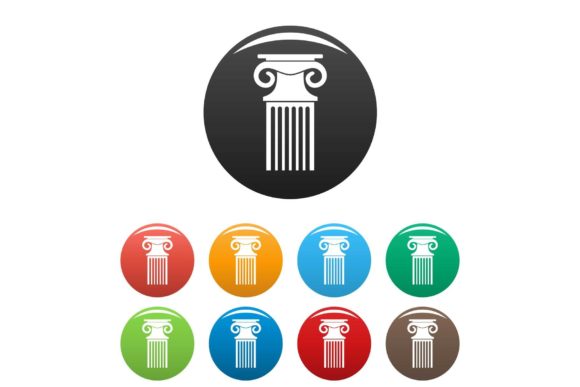
The simplicity of the illustration—a simple depiction of a column isolated on white—allows it to blend unobtrusively into academic papers or slide decks without distracting from the core data. However, its presence adds a professional polish that signals effort and attention to detail. For hobbyists interested in graphic design or history, these icons offer a way to visually represent classical studies or architectural concepts in a modern context.
Event Planning and Hospitality
The hospitality industry relies heavily on aesthetics to create memorable experiences. Invitations, event programs, and signage often benefit from the use of classic motifs. The Decorative Column Icon evokes the grandeur of ballrooms, museums, and historic venues. By utilizing the color variations found in the vector set, event planners can match the iconography to the theme of a wedding, conference, or gala.
For example, a gold-colored column vector might be used on a black background for a formal evening event, while pastel shades could suit a spring garden party. The ability to scale these images without pixelation ensures that they look impeccable on everything from small table cards to large stage backdrops.
Advantages of Vector-Based Illustrations
Why choose a vector-based solution over a raster image? The answer lies in the fundamental differences in how these graphics are constructed and rendered. A Decorative Column Icons Set Color Vector is built on mathematical equations, whereas a raster image is made of a grid of pixels. This distinction leads to several tangible advantages for the end-user.
- Scalability: As mentioned earlier, vectors can be resized to any dimension without losing clarity. This is critical for responsive web design, where images must adapt to various screen sizes automatically.
- Editability: In a vector file, every component is accessible. If a client wants to change the shade of blue on a column icon, a designer can do so in seconds by adjusting the fill color code, rather than repainting the entire image.
- File Size Efficiency: Despite containing complex details, vector files often have smaller file sizes compared to high-resolution raster images. This contributes to faster website loading speeds, which is a key factor in SEO and user retention.
- Print Quality: Because vectors are resolution-independent, they can be printed at any size, from a business card to a building wrap, without the risk of blurriness or jagged edges.
These benefits make the Decorative Column Icon a superior choice for professionals who require precision and flexibility. Whether the project involves a one-off brochure or a comprehensive rebranding campaign, the vector format ensures that the visual assets remain robust throughout the lifecycle of the project.
Design Considerations and Best Practices
While the Decorative Column Icons Set Color Vector offers immense potential, effective implementation requires thoughtful consideration. Overuse of decorative elements can clutter a design and distract from the primary content. It is important to strike a balance between aesthetic appeal and functionality.
One common pitfall is ignoring the color contrast. Even if the column icon is vibrant, it must stand out against the background to be effective. Designers should test their choices for accessibility, ensuring that the visual cues are perceivable by users with varying levels of vision. Additionally, consistency is key. If a set of column icons is chosen for a header, similar styles should be used for footers or sidebars to maintain a unified look.
Another consideration is the context of the audience. What works for a tech startup might not resonate with a heritage museum. The style of the column—whether it is minimalist, ornate, or abstract—should align with the cultural expectations of the target demographic. The availability of a full set allows designers to pick and choose the style that best fits the narrative they wish to tell.
The Future of Iconography in Digital Spaces
As digital interfaces continue to evolve, the role of iconography is shifting from mere decoration to active communication. Users expect intuitive navigation and clear visual hierarchies. The Decorative Column Icon represents a bridge between traditional design principles and modern digital needs. It combines the timeless appeal of classical architecture with the agility of contemporary vector technology.
Trends in web design are moving towards more immersive and personalized experiences. Personalization engines may soon allow websites to dynamically swap out icon sets based on user preferences or location. Having a library of high-quality, versatile vectors like the Decorative Column Icons Set Color Vector prepares businesses for these future possibilities. It allows for rapid prototyping and testing of different visual strategies without the cost of commissioning new artwork.
Furthermore, the rise of motion graphics and interactive web elements opens new avenues for these icons. A static column can easily be animated to rotate, grow, or change color on hover, adding a layer of interactivity that engages users. The vector nature of the asset ensures that these animations remain smooth and crisp, regardless of the device being used.
Empowering Creators and Hobbyists
Finally, the democratization of design tools means that anyone with an internet connection can produce professional-grade work. Hobbyists, students, and independent creators no longer need expensive licenses or years of training to incorporate high-quality assets into their projects. A simple illustration of a decorative column vector isolated on white is accessible to all, provided they have the right software.
This accessibility fosters innovation. When barriers to entry are lowered, more people experiment with design, leading to a richer variety of creative outputs. Whether it is a student designing a poster for a school play or a small business owner creating a logo, the Decorative Column Icons Set Color Vector provides a foundation for excellence. It empowers users to express their ideas clearly and effectively, proving that good design is not just about aesthetics, but about communication.
In conclusion, the value of the Decorative Column Icon lies in its adaptability, precision, and aesthetic appeal. By leveraging the strengths of vector technology and the symbolic power of the column, designers can create content that resonates with audiences across the globe. As we move forward in a visually driven digital age, assets that combine tradition with modernity will undoubtedly play a pivotal role in shaping the way we see and interact with the world around us.