Mastering Christmas Banner Design for Festive Digital Campaigns
The digital landscape during the holiday season is a battleground of attention. In an environment where users are bombarded with thousands of promotional messages daily, Christmas banner design serves as the critical first line of defense for brands seeking engagement. It is not merely about placing a festive image on a webpage; it is about orchestrating color, texture, and emotion to stop the scroll. The most effective campaigns often rely on specific visual motifs that resonate deeply with human psychology, such as the classic combination of green realistic pine branches and golden decorative baubles. This pairing creates a sense of authenticity and luxury that generic clip art simply cannot achieve.
The Psychology of Festive Visuals in Vector Graphics
When professionals approach Christmas banner design, they must understand the weight of symbolism carried by traditional elements. The choice of imagery is rarely arbitrary. Green realistic pine branches represent nature, longevity, and the enduring spirit of winter. They ground the design in reality, offering a tactile quality that users can almost feel through their screens. When paired with golden decorative baubles, the composition shifts from simple decoration to a statement of value and celebration. Gold signifies wealth, warmth, and high quality, while the spherical shape of the bauble draws the eye naturally toward the center of the frame.
This dynamic works exceptionally well in vector formats. Unlike raster images that pixelate when scaled, vector graphics allow for crisp lines and smooth gradients regardless of the device resolution. A vector sale web banner utilizing these elements ensures that the pine needles remain sharp on a 4K monitor and the reflections on the gold ornaments stay perfect on a mobile phone screen. This technical precision contributes significantly to the perceived professionalism of the brand presenting the offer.
Why Realism Matters in Digital Decorations
In recent years, there has been a distinct shift away from cartoonish or overly stylized holiday graphics toward hyper-realistic textures. Consumers have developed a higher tolerance for authentic visuals, and they respond better to designs that mimic the physical world. A banner featuring green realistic pine branches offers depth and shadow play that flat illustrations lack. This realism helps bridge the gap between the digital storefront and the cozy atmosphere of a physical home or office decorated for the holidays.
Furthermore, the inclusion of golden decorative baubles adds a layer of complexity that elevates the design. These elements are not just background noise; they act as focal points. By using lighting effects and specular highlights, designers can make the baubles appear three-dimensional. This technique guides the user's gaze directly to the call-to-action button or the primary discount offer placed nearby. The interplay between the organic, rough texture of the pine needles and the smooth, reflective surface of the gold baubles creates a balanced visual rhythm that is pleasing to the eye and reduces cognitive load.
Strategic Applications Across Industries
The versatility of a well-crafted Christmas banner design extends far beyond retail e-commerce. While sales promotions are the most obvious use case, the application of these visuals spans various sectors, each requiring a nuanced approach to maintain relevance and effectiveness.
- Retail and E-Commerce: For online stores, the primary goal is conversion. A vector sale web banner featuring realistic pine and gold ornaments can be used to highlight limited-time offers. The urgency of a "Flash Sale" is amplified by the premium look of the gold accents, suggesting that the deals inside are equally valuable.
- Educational Institutions: Schools and universities often use holiday banners to announce break schedules, virtual open houses, or end-of-term events. Here, the tone should be inviting rather than aggressive. The natural elements of the pine branches provide a calming backdrop that feels welcoming to parents and students alike.
- Corporate Communications: Businesses frequently update their internal portals or external newsletters with seasonal greetings. A sophisticated design using golden baubles conveys respect and gratitude to employees and clients without appearing too commercial. It reinforces the brand's identity as one that values tradition and quality.
- Non-Profit Organizations: Charities often run year-end giving campaigns. The emotional resonance of the pine branches can evoke feelings of community and warmth, encouraging donations. The golden baubles can symbolize the light and hope that contributions bring to those in need.
In each of these scenarios, the underlying principle remains the same: the visual elements must support the message. A mismatched style can confuse the audience, whereas a cohesive design using realistic textures builds trust and authority.
Technical Considerations for Vector Implementation
Creating a successful Christmas banner design requires more than just artistic flair; it demands technical proficiency, particularly when working with vectors. The flexibility of vector files allows for easy customization, but it also requires a disciplined workflow to ensure the final output is optimized for the web.
One of the primary advantages of using vectors for this purpose is scalability. A Christmas banner design might need to be displayed on a massive digital billboard, a tablet, and a smartphone simultaneously. Raster images would require multiple versions at different resolutions, leading to increased storage costs and potential inconsistencies. With vectors, a single file can adapt to any dimension while maintaining perfect clarity. This is crucial for responsive web design, where the layout must adjust fluidly to the user's screen size.
Another technical consideration is the optimization of file size. Even though vectors are generally lighter than high-resolution photos, complex gradients and realistic shadows on pine branches and gold baubles can increase the file weight if not managed correctly. Designers must balance visual fidelity with performance. Using layers effectively and simplifying unnecessary anchor points can keep the file lightweight without sacrificing the realistic appearance of the decorations.
Additionally, color management is vital. The specific shade of green used for the pine branches and the hue of the gold must be consistent across all platforms. Variations in color rendering can occur between different monitors and browsers. Ensuring that the colors are defined in standard web-safe palettes or RGB/CMYK profiles appropriate for the medium guarantees that the golden baubles shine as intended and the greenery looks vibrant, not dull.
Optimizing for User Experience and Accessibility
While aesthetics are paramount, accessibility cannot be overlooked. A visually stunning banner is useless if it is inaccessible to users with disabilities. When incorporating text into a Christmas banner design, contrast ratios must be carefully checked against the busy background of realistic pine and gold. The intricate details of the decorations can sometimes interfere with text readability.
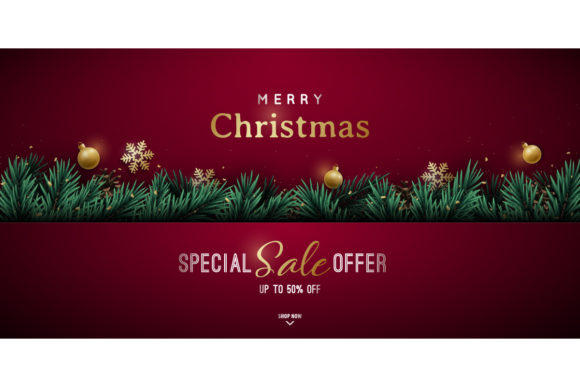
To mitigate this, designers often use semi-transparent overlays or strategic positioning of the text away from the densest parts of the graphic. Furthermore, providing alternative text descriptions for screen readers is essential. Describing the scene as "a festive banner with realistic green pine branches and shimmering golden baubles surrounding a sale announcement" ensures that visually impaired users receive the same context as sighted users. This adherence to accessibility standards enhances the overall user experience and demonstrates a commitment to inclusive design.
Trends Shaping Holiday Digital Marketing
The world of digital marketing is constantly evolving, and Christmas banner design is no exception. Staying ahead of trends allows creators to produce content that feels fresh and engaging rather than stale or repetitive. One emerging trend is the integration of motion within static vector concepts. While the base design relies on the static beauty of pine branches and baubles, subtle animations—such as gently swaying branches or twinkling lights on the ornaments—can dramatically increase click-through rates.
Another significant trend is the move towards minimalism amidst the clutter. Instead of filling every inch of the banner with snowflakes, candy canes, and reindeer, modern designs often focus on a few high-quality elements. A clean layout that features a single, large, realistic pine branch framing a golden bauble can be more impactful than a crowded collage. This approach respects the viewer's time and allows the core message to stand out clearly.
Sustainability is also becoming a key theme in holiday design. Brands are increasingly highlighting eco-friendly practices, and their visual assets reflect this. Using green realistic pine branches can subtly communicate a connection to nature and environmental stewardship. When combined with the idea of a sustainable product line, the visual narrative becomes powerful and aligned with consumer values.
Implementation Strategies for Maximum Impact
Once the design concept is finalized, the implementation phase determines its success. Placing a Christmas banner design on a website is not a set-and-forget task. It requires strategic placement and timing. The best results are often achieved when the banner appears in high-traffic areas, such as the homepage hero section, the cart page, or as a sticky header that follows the user as they navigate.
Timing is equally critical. Launching a campaign too early can result in banner blindness, while launching too late means missing the peak shopping window. A phased approach often works best. Early campaigns might focus on building anticipation with softer imagery, while later campaigns ramp up the urgency with bolder calls to action and prominent discount codes integrated into the design.
Testing is an indispensable part of the process. A/B testing different variations of the Christmas banner design can reveal which elements resonate most with the target audience. Perhaps the version with larger golden baubles performs better, or maybe the one with a more minimalist pine arrangement drives more conversions. By analyzing data and iterating on the design, businesses can refine their strategy and maximize their return on investment.
In conclusion, the art of Christmas banner design is a blend of creativity, technical skill, and strategic thinking. By leveraging the timeless appeal of green realistic pine branches and golden decorative baubles in vector format, creators can craft visuals that are both beautiful and functional. Whether for a small business owner looking to boost local sales or a global corporation aiming to engage millions of customers, the principles of realism, accessibility, and strategic implementation remain the foundation of success. As the holiday season approaches, investing in high-quality, well-thought-out banner designs will pay dividends in brand perception and customer engagement.